Landscape Architecture vs Landscaping: What Design Really Adds
July 24, 2026
QUICK ANSWER: Here's the short version of landscape architecture vs landscaping: one plants the yard, the other plans it. Landscaping is the hands-on work — beds, sod, mulch, mowing, seasonal color. Landscape architecture is the planning discipline underneath, pulling from grading, drainage, site layout, horticulture, and soil science to decide how the whole property works together over years, not one season. It sorts out how water leaves a slope, where structures sit, and how you move through the space. On a Maryland lot with heavy clay and a grade that tips toward the house, that planning is the difference between a yard that drains and one that puddles.
Your backyard slopes toward the house, and you've never thought much about it. Then a hard summer storm rolls through Baltimore County, and a shallow lake shows up near the patio the next morning. It sits there two days. The mulch floats. A corner of the new bed you paid for last spring is already thin and yellow. None of that is a plant problem. It's a planning problem, and it points straight at the gap between two things people use as if they mean the same thing.
Landscaping and landscape architecture are not interchangeable. One is the labor that fills a yard. The other is the thinking that decides whether the yard holds up. Around here — White Hall, the Hereford zone, the properties tucked into the hills north of Baltimore — that difference gets expensive to ignore, because the land itself fights back. Clay soil that won't drain. Grades that funnel runoff. Deer that treat fresh plantings like a salad bar. Good planting alone can't answer any of that.
Landscaping plants the yard. Landscape architecture plans it.
Start with the plain distinction. Landscaping is the work you can watch happen in an afternoon: someone lays sod, sets shrubs, spreads mulch, edges a bed. It's real skill, and it matters. But it works inside a plan someone else already made, or inside no plan at all.
Landscape architecture is that plan. It's a design discipline that borrows from a lot of fields at once — civil engineering, horticulture, ecology, soil science, even a bit of drafting and structural know-how. A landscape architect studies how a site drains, how sun tracks across it through the seasons, where the low spots collect water, and how a patio, a wall, and a tree line should relate to each other before any of it gets built. The training runs toward grading, drainage, site planning, and building materials, not just which perennial looks nice by the door.
Two words that get blurred. People also say "landscape designer" and "landscape architect" as if they're one job. They overlap, but the emphasis shifts. A designer leans toward the look and layout of a space — color, texture, the feel of a garden. Architectural planning leans harder into the technical side: how a slope gets reshaped, how a retaining wall carries load, how a whole site keeps functioning after a decade of freeze-and-thaw. On a flat, simple lot, that extra layer might be overkill. On a graded, wooded, clay-heavy property, it's the part that keeps the pretty stuff alive.
Grading and drainage: the work that happens before a plant goes in
This is paragraph text. Click it or hit the Manage Text button to change the Water decides more about a yard than plants do. We've walked properties where the beds were beautiful and completely doomed, because the ground under them shed every drop of rain toward the roots and kept it there.
Maryland clay is the reason. It's dense, it holds water like a sponge that never quite wrings out, and after a wet stretch it turns to something close to modeling clay. Sink a plant into an unamended hole in that soil and you've built a bathtub — water pools around the roots and can't move. Grading is how you fix the setup before it starts. You shape the land so water runs where you want it, away from the house, away from the beds that can't take wet feet, toward a swale or a rain garden that's meant to soak it up.
That's a planning call, not a planting call. It involves reading the slope, measuring the fall across a yard, and deciding where every inch of runoff ends up. Get it right and the same beds that would've drowned instead thrive, because their roots sit in soil that breathes. Get it wrong and no plant list saves you.
font, color, size, format, and more. To set up site-wide paragraph and title styles, go to Site Theme.
TIP:
After the next heavy rain, walk your property and note where water stands longest — usually a corner, a bed edge, or a low run near the foundation. Those puddles are a free drainage map. They tell a designer exactly where grading and soil work need to happen before anything gets planted there.
The bones of a yard you actually move through
Think about a yard the way you'd think about a house. A house isn't a pile of nice furniture — it's rooms, doorways, and hallways that decide how you live in it. A well-planned property works the same way. There's structure under the beauty, and that structure is what architecture brings.
Circulation
How do you get from the driveway to the back door with your hands full of groceries? Where does the path to the fire pit go, and does it stay dry in March? Design answers that on paper first, so the walkways land where people actually walk instead of where the grass happened to wear thin.
Structure and grade changes
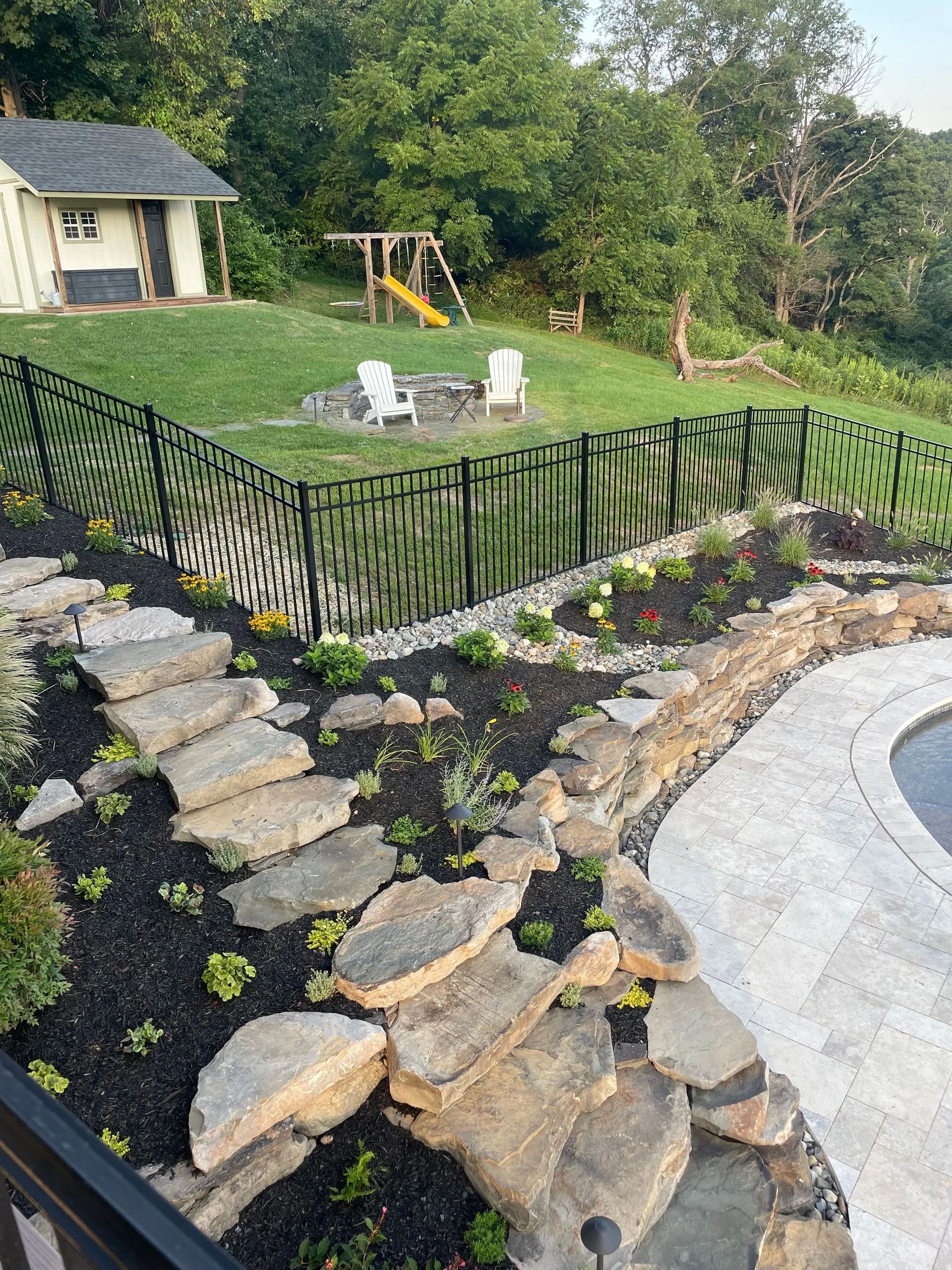
Slopes get handled with retaining walls, terraces, and steps, and those elements do double duty — they hold back a hillside and they carve a sloped yard into usable, level ground. A wall in the wrong spot is a headache. A wall in the planned spot turns a bank nobody could use into a patio you use every weekend.
Sequence
A designed property reveals itself as you move through it. You round a corner and the pool comes into view; a screen of plantings hides the neighbor's shed until you're past it. That's deliberate. Landscaping installs the pieces. Architecture decides where they go and in what order you meet them.
None of this shows up in a plant order. It shows up in a site plan, drawn before the first shovel, and it's the reason two yards with the identical plant list can feel like completely different places to stand in.
Planting that works like architecture, not decoration
Here's where the two disciplines finally shake hands. Plants aren't just color you sprinkle around — in a real design they do structural jobs. A row of evergreens becomes a wall that blocks wind and a bad view. A canopy tree becomes a ceiling that throws shade over a patio in July. Beds get shaped to guide the eye and frame the parts of the yard worth looking at.
That planning also has to answer the local problems head-on. Deer pressure up here is relentless, and it changes the whole plant palette — you build the front line of a design around things deer tend to leave alone, and you tuck the tastier plants where they're protected, not out by the road as a first course. Four seasons means a good plan carries interest through all of them: spring bloom, summer fullness, fall color, and the bark, berries, and evergreen structure that hold a yard together through a gray Maryland January. A designer picks for that whole arc. A quick planting job picks for the day it's installed.
Soil comes back into it, too. The right plant in the wrong soil is a slow failure, so architectural planning matches species to what the ground can actually give them — drainage, pH, sun, root room — instead of forcing a wish list into clay and hoping.
WARNING: Don't let a big planting install go in before the grading and drainage are settled. Plants set into unshaped, waterlogged clay can sit fine for a season, then decline once their roots hit standing water — and by then you're tearing out mature material to fix ground that should've been handled first.
Frequently Asked Questions
Is landscape architecture only for big commercial projects?
No. It scales to a single backyard. Grading, drainage, and spatial planning matter as much on a half-acre lot with a bad slope as on a campus. Complex sites need it most; flat, simple ones need it least.
Do I need a landscape architect or a landscape designer for my yard?
Depends on complexity. A designer focuses on look and layout — plant choices, bed shapes. Architectural planning adds grading, retaining walls, and drainage engineering. Simple refreshes suit a designer; slopes, standing water, or hardscape need deeper planning.
How does landscape architecture handle Maryland's clay soil and drainage?
It starts by reading how water moves on your lot, then grades slopes away from the house, builds swales or rain gardens, and amends tight clay. The water plan comes before the planting plan.
Can good design really reduce long-term yard maintenance?
Often, yes. Plants matched to soil, sun, and deer pressure need less babying and replacing. Water graded to drain instead of pool means less erosion and fewer dead spots. A planned yard needs steadier, lighter upkeep.
How is landscape architecture different from just hiring a landscaper?
A landscaper installs and maintains — sod, beds, mulch, mowing. That's the labor. Landscape architecture is the design deciding what gets installed, where, and how it fits together over time. Complex properties benefit most when planning comes first.
Where the design shows up later
You won't notice most of the planning on install day. The yard will look finished either way. The difference surfaces slowly — the first spring the beds don't flood, the first winter the terrace still drains, the fifth year the trees have grown into the ceiling they were always meant to be. That's the quiet payoff of planning a property instead of just filling it. Walk your own yard this week and watch where the water goes. The land is already telling you what it needs the plan to solve.
Book a design consultation — a designer walks your property, reads the grade and drainage, and maps how the whole site should come together before any work begins. With over 30
years of experience, Balco Landscapes
handles design and installation together across White Hall, Maryland and the greater Baltimore area, so the plan and the build stay in the same hands.